How To Read Reversed Cards: A Shift In Energy
Reversed tarot cards do not have to be frightening. They often point to blocked, excessive, internalized, or delayed energy.
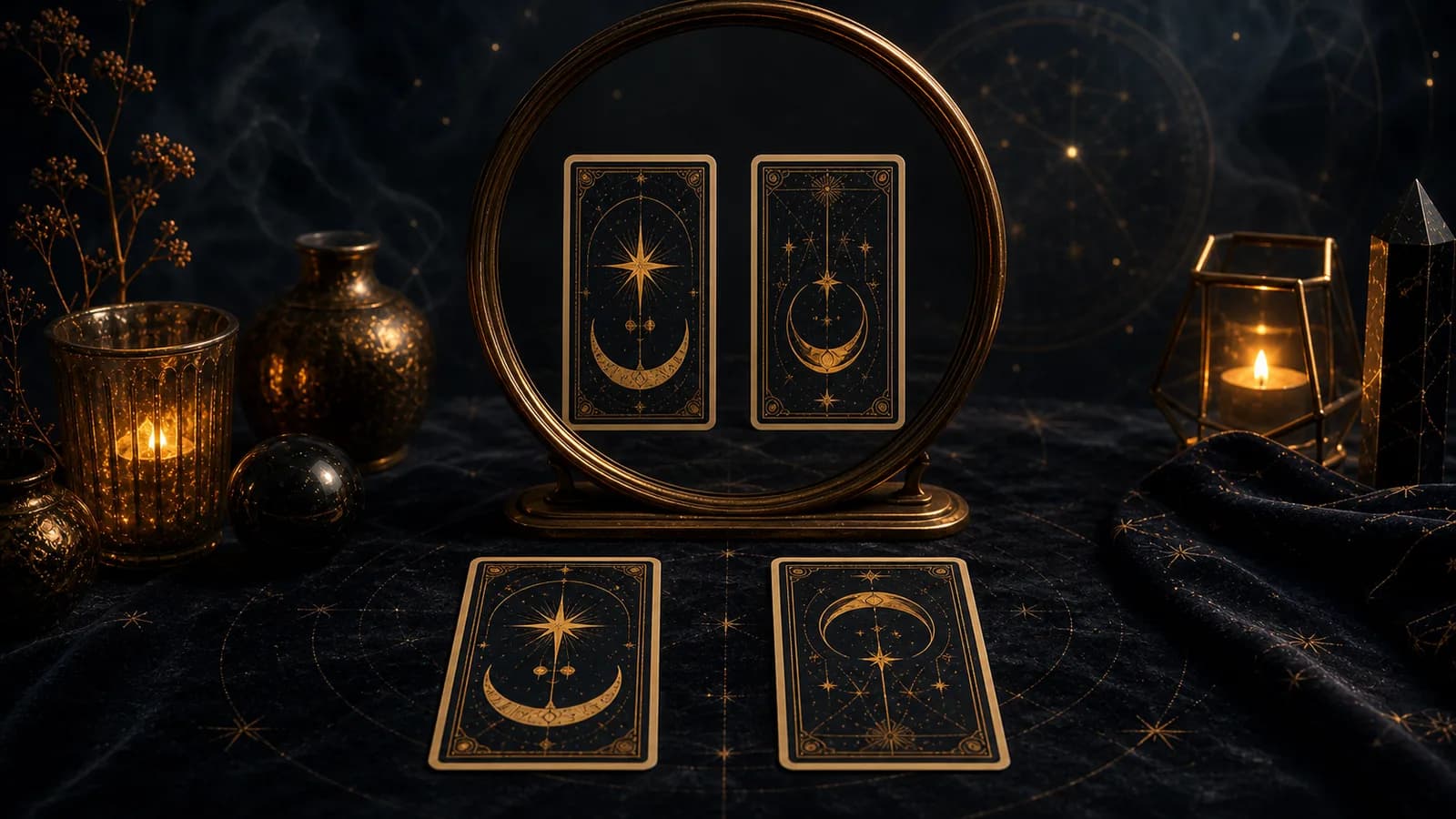
A reversed card does not have to mean something bad. It can show the same energy turning inward, becoming blocked, becoming excessive, arriving late, or waiting for a better expression. The first step is to read it without fear.
Four Ways To Understand A Reversal
The first meaning is blockage: the theme exists, but it is not flowing. The second is excess: the card’s energy is present, but out of balance. The third is internalization: the event may be happening inside you rather than outside. The fourth is delay: the timing may not be ready.

Reversed Does Not Always Mean Opposite
The Sun reversed does not automatically mean failure. It may mean joy is hidden, or your definition of success needs adjustment. The Lovers reversed does not always mean separation. It can point to misalignment between choice and values.
A reversal is not just the dictionary opposite. Ask: where is this card’s energy not being used well?
You Can Choose Not To Use Reversals
Beginners can absolutely read without reversals. Once the upright meanings feel familiar, reversals can add nuance. Tarot is not an exam, and you do not need every layer at once.
If you do use reversals, decide before shuffling. Clear rules make the reading steadier.
Read Reversals As Invitations
Treat a reversed card as a reminder, not a judgment. It does not say you failed. It points to an area that wants attention, adjustment, or gentleness.
Reversals Are Optional, But Consistency Matters
Readers handle reversals in different ways. Some use them strictly, some ignore them completely, and some treat them as emphasis, blockage, or internalization. Waite’s Pictorial Key to the Tarot lists reversed meanings for many cards, so reversals are part of modern tarot tradition, but they are not mandatory for every reading.
The key is consistency. Decide before shuffling. Do not change the rule only because a difficult card appears.
Five Useful Questions
When a card is reversed, ask five questions. Is the card’s theme blocked? Is it excessive? Is it turned inward? Is it delayed? Is it asking me to return to the core lesson of the upright card?
Temperance reversed, for example, does not have to mean hopelessness. It may point to imbalance, overextension, or the need to redistribute time and energy.
Read Reversals With The Question
The same reversed card changes depending on the question. In a career reading, a reversed Wand may show blocked action. In a relationship reading, a reversed Cup may show difficulty expressing emotion. In a learning question, a reversed Sword may suggest mental confusion or overthinking.
Do not read a reversal in isolation. Read it with the question, the spread position, and the neighboring cards.
Avoid Fear-Based Language
Reversals can easily become frightening if handled carelessly. “Death reversed means something terrible will not end” is less useful than “a transformation may be delayed or resisted.” “The Tower reversed is worse disaster” is less helpful than “you may already sense instability but are not ready to face it.”
Good reading language should make action possible.
A Practice Exercise
Choose one card. Write its upright keywords, then four reversed possibilities: blocked, excessive, internalized, delayed. After doing this with ten cards, reversals become less like a second dictionary and more like flexible observation.
A Four-Step Method For Any Reversal
When a reversed card appears, use the same process every time. First, read the upright card honestly. Second, choose the reversal lens that fits the question: blocked, excessive, internalized, or delayed. Third, look at nearby cards for context. Fourth, turn the message into one practical sentence.
For example, The Magician upright may suggest skill, will, and available tools. Reversed in a work question, it could show scattered focus, unused resources, or performance without substance. If it appears beside Eight of Pentacles, the advice may be to practice steadily instead of trying to look impressive. If it appears beside Seven of Cups, the issue may be too many options and not enough commitment.
This keeps reversals flexible without making them random.
Examples By Suit
Reversed Cups often point to emotional flow: blocked feeling, over-idealization, difficulty receiving care, or private grief. Reversed Swords often point to thought and language: confusion, harsh self-talk, unspoken truth, or arguments that loop without resolution. Reversed Coins or Pentacles often point to the body and material life: unstable routines, money stress, undervalued labor, or a need to return to basics. Reversed Wands often point to energy: burnout, impatience, blocked desire, or action without direction.
These suit patterns are not rules, but they help you choose a starting point. If you need a broader map of tarot structure, begin with Tarot Basics.
Reversed Cards In Spreads
In a three-card spread, a reversed card may show where the reading needs attention. If the advice card is reversed, the action may be internal or corrective. If the obstacle card is reversed, the issue may be hidden, avoided, or losing power. If the past card is reversed, it may show unfinished business rather than a literal event.
Card position matters. A reversed Strength card in an “inner resource” position could mean gentleness is available but underused. The same card in an “obstacle” position could mean force, self-doubt, or a distorted idea of courage.
For layout ideas, see How To Choose A Tarot Spread.
When Not To Use Reversals
Skip reversals if they make every reading feel punitive. Skip them if you are still learning basic card imagery. Skip them during a reading for someone who is highly distressed, unless you can explain the reversal gently and clearly.
Reading without reversals is not less serious. Many readers get nuance from card positions, neighboring cards, elemental balance, and visual symbols. Reversals are one tool, not the whole craft.
Reversal Examples With Familiar Cards
The Sun reversed may still carry warmth, but the light may be partial. In a confidence question, it can show joy that is available but hard to receive. In a visibility question, it may point to fear of being seen. In a planning question, it may warn against mistaking optimism for preparation.
The Hermit reversed can point in two very different directions. It may show isolation that has gone too far, or it may show a need to withdraw from noise and recover inner focus. The question decides which reading is more useful. If the spread asks about burnout, the card may advise solitude. If it asks about a relationship conflict, it may warn against disappearing instead of communicating.
The Tower reversed is often best read with care. It may suggest avoided disruption, the aftermath of a shock, or a structure that is unstable but not yet confronted. The practical question is not “How bad will this be?” but “What truth would be safer to face sooner rather than later?”
Keep A Reversal Log
For two weeks, write down every reversal with three possible meanings before choosing one. This trains flexibility. Over time, you will notice your own patterns: perhaps reversed Cups often appear when emotion is unspoken, or reversed Wands appear when you are trying to force momentum.
Turning Reversals Into Action
End every reversed-card interpretation with one verb. If the card feels blocked, the verb may be unclog, name, rest, repair, or practice. If it feels excessive, the verb may be reduce, pace, simplify, or soften. If it feels internalized, the verb may be reflect, journal, admit, or ask. If it feels delayed, the verb may be wait, prepare, verify, or return.
This keeps the reversal from becoming a vague warning. The point is not to fear the inverted image. The point is to notice where the card's energy wants a more skillful expression.
Quick FAQ
Does reversed mean the opposite of upright?
Sometimes, but not always. Opposite meaning is only one possibility. A reversal can also mean blocked, excessive, internal, delayed, weakened, or asking for review.
Are reversed cards negative?
No. They often point to adjustment. A reversed card may be the most useful card in the spread because it shows where attention can change the pattern.
Should I flip reversed cards upright if I dislike them?
Decide your rule before shuffling. Changing the rule mid-reading usually reflects anxiety rather than insight. If a reversal feels too intense, read it as a gentle prompt instead of a threat.