Tarot Basics: How to Read the Message in a Card
Learn how to approach tarot through imagery, symbols, reversals, and better questions without treating the cards as fixed predictions.
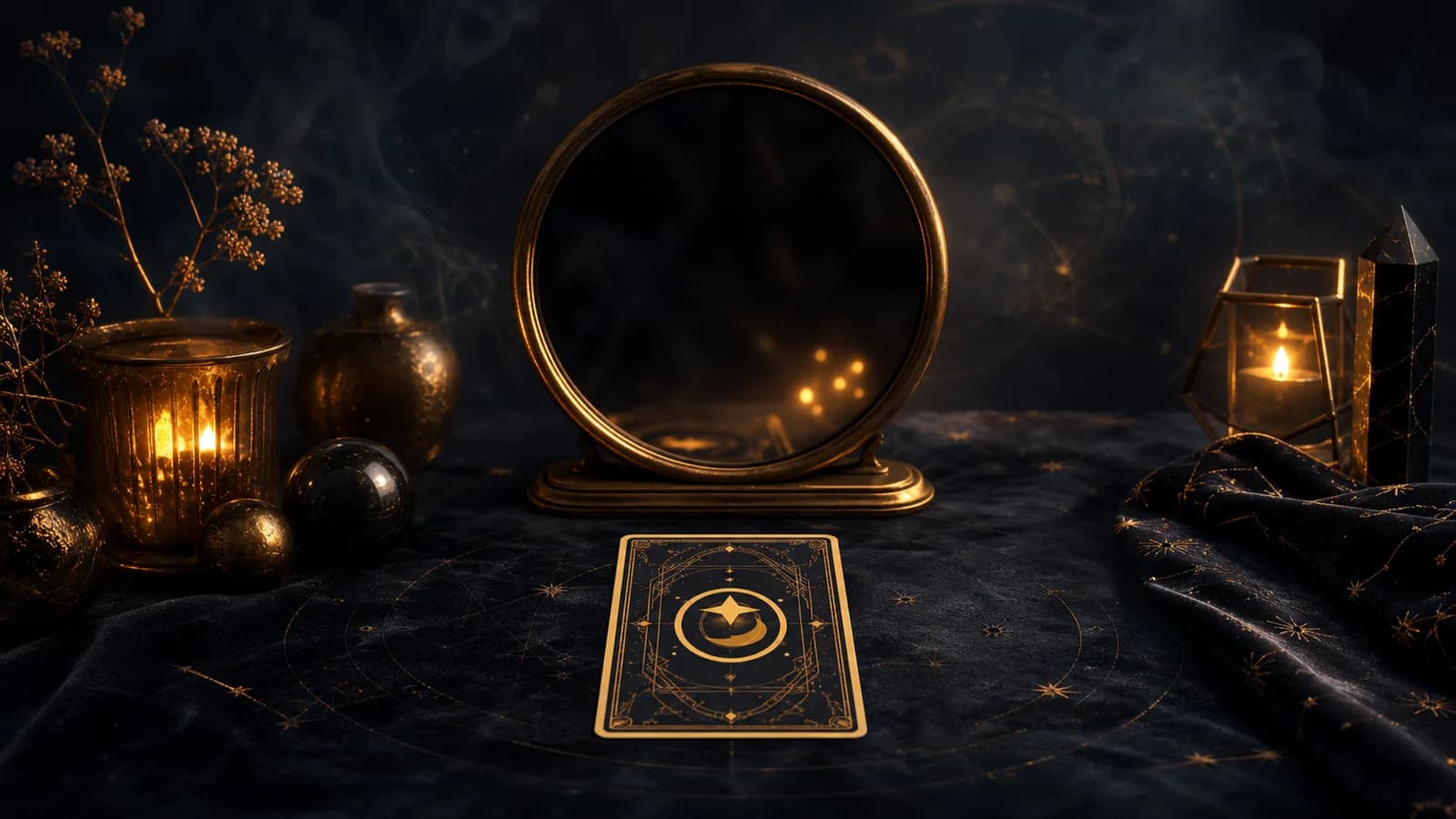
The beauty of tarot is not that it hands you a fixed future. Its real strength is that it gives shape to what feels unclear. A card can become a mirror: it reflects a question, a mood, a pattern, or a choice that has been waiting for language.
Tarot Is Not Here To Replace Your Choice
A grounded tarot reading works more like symbolic reflection than prediction. It should not take responsibility away from you. Instead, it helps you look at what is already present: tension, desire, fear, timing, possibility.
When you draw a card, begin with three simple questions:
- What do I notice first?
- Which part of my current situation does this image resemble?
- If this card were offering one reminder, what would it ask me to see?
Keywords are useful, but they are only the doorway. The deeper reading begins when the card meets the real question in front of you.
Start With The Image, Not The Verdict
Beginners often ask whether a card is good or bad. Tarot is more nuanced than that. Look first at the image: posture, light, landscape, water, doors, mountains, stars, and the direction of movement.
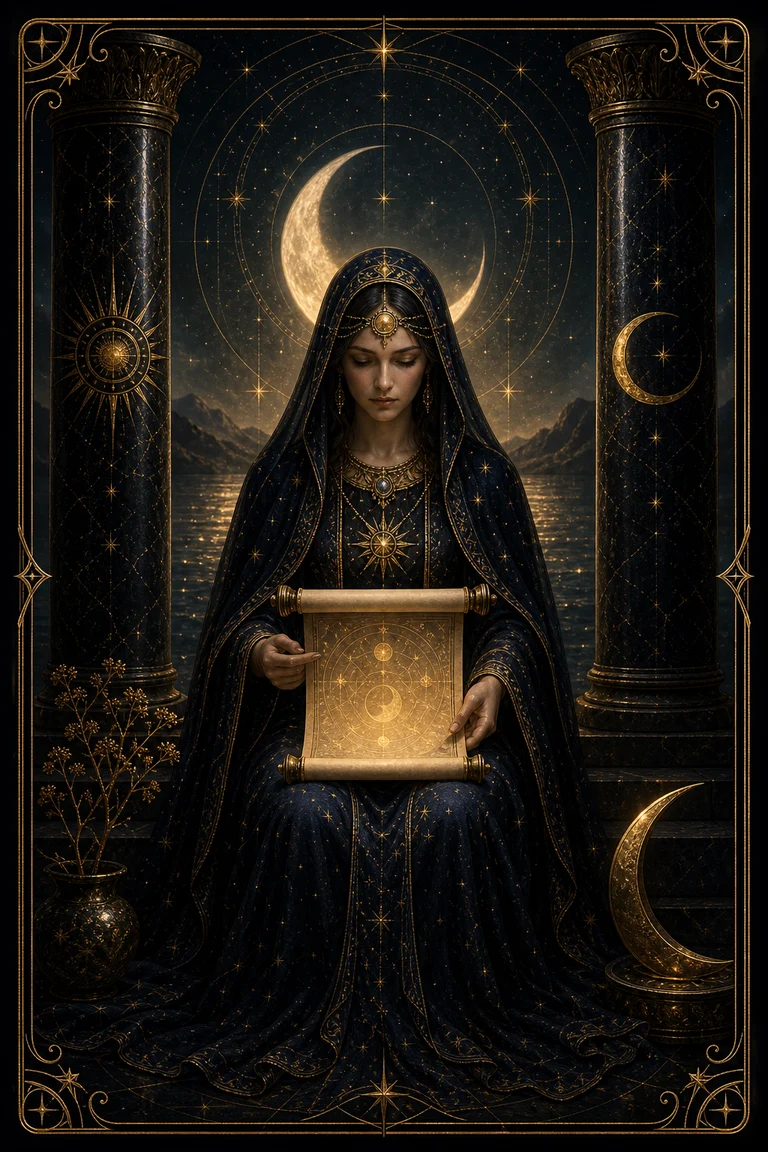
A road may point toward process and choice. Water often brings attention to emotion. A tower, gate, or threshold may suggest that an old structure is changing. Before deciding what the card means, describe what it shows.
Reversals Can Be Gentle
A reversed card does not have to mean disaster. It can indicate blocked energy, excess, internalization, delay, or a theme that has not yet become conscious.
You might read a reversal as:
- This theme is not ready to move outward yet
- The energy of the card is being overused or suppressed
- The answer begins internally before it becomes action
This approach keeps the reading useful instead of frightening.
Better Questions Create Better Readings
Tarot tends to be more helpful with open-ended questions than with yes-or-no questions. A strong question brings the focus back to understanding, choice, and agency.
Instead of asking:
“Will I succeed?”
Try:
“What do I need to understand in order to move closer to this goal?”
Instead of asking:
“What do they really think?”
Try:
“What pattern do I need to notice in this relationship?”
The more your question returns to what you can observe or choose, the more useful the card becomes.
A Four-Layer Way To Read One Card
If you are not sure where to begin, use this sequence:
- Image: describe what you see before interpreting it.
- Feeling: notice the emotional tone of the card.
- Situation: connect the card to your question.
- Action: ask what small adjustment this insight invites today.
Tarot does not need to create distance or fear. At its best, it brings you closer to your own honest perception. The card is the mirror; the life being reflected is yours.
A Short Grounded History
Today tarot is often associated with divination, but historically it began as a card deck. Britannica explains that tarot decks appeared in Italy in the 1430s when a fifth suit of illustrated triumph cards and a Fool card were added to the existing four-suited pack. The Met’s record for a Visconti-Sforza tarot card also describes early tarot as using the Italian suits of Cups, Swords, Batons, and Coins, plus the Fool and twenty-one trump cards.
This matters because tarot was not born as a single fixed mystical system. It has moved through card games, visual art, fortune-telling, occult interpretation, and modern reflective practice. A grounded reader can respect the tradition without treating every symbolic claim as historical fact.
The Structure Of A 78-Card Deck
A standard tarot deck contains 78 cards. The V&A summarizes the structure as 22 Major Arcana cards and 56 Minor Arcana cards. The Major Arcana includes archetypal figures and images such as The Fool, The High Priestess, The Lovers, Death, The Moon, The Sun, and The World. The Minor Arcana is divided into four suits.
Modern readers often connect the suits with areas of life: Cups with emotions and relationships, Swords with thought and conflict, Coins or Pentacles with material life and the body, and Wands with action, energy, and creativity. These associations are not the only possible system, but they give beginners a useful map.
Keywords Are Doorways, Not Final Answers
Card keywords are helpful, but they can flatten a reading. “The Star means hope” is a beginning, not a conclusion. Hope for what? Healing from what? What kind of direction is returning?
Waite’s public-domain Pictorial Key to the Tarot lists traditional divinatory meanings, but the images themselves invite more than memorization. A practical reading combines the card’s inherited meanings, the visual details, the question, and the reader’s honest observation.
A Complete Beginner Reading Process
Try this five-step process. First, write the question down. Second, decide your spread and whether you will use reversals before shuffling. Third, describe the image before interpreting it. Fourth, connect the image to the question. Fifth, translate the insight into one small action.
If the physical preparation still feels uncertain, how to shuffle tarot cards covers gentle methods, cutting, drawing, reversals, and large-deck adjustments without prescribing a single ritual.
For example, if you ask, “How should I face this period of stagnation?” and draw The Hanged Man, you do not have to read it as failure. You might see pause, surrender, and a shift in perspective. The action could be: “Today I will stop forcing speed and look for the angle I have missed.”
Common Mistakes
One mistake is letting tarot make decisions for you. Another is treating certain cards as absolute: Death as disaster, The Sun as guaranteed success, The Tower as punishment. A third mistake is ignoring the question and reading only from a fixed meaning list.
Tarot is most useful when it helps you notice, name, and choose. The cards can open a conversation, but they should not close your judgment.
Build A Beginner Practice Plan
A simple practice plan is better than trying to learn the whole deck in one weekend. For the first week, draw one card a day and describe only the image. For the second week, add one traditional keyword. For the third week, connect the card to a real moment from the day. For the fourth week, review your notes and look for repeated suits, symbols, or emotional tones.
This structure helps you learn through observation. It also prevents the common beginner habit of collecting meanings without developing judgment. If you want a ready-made version, use the daily one-card practice.
How To Read A Three-Card Spread
Once one-card readings feel comfortable, try three cards. A beginner-friendly structure is “situation, obstacle, advice.” Read each card by itself, then read the line as one sentence. If the cards are The Moon, Two of Pentacles, and Temperance, the sentence might be: “The situation is unclear, the obstacle is juggling too much, and the advice is to restore balance gradually.”
Do not treat the third card as a command. Treat it as a direction to test in real life. If the advice is Temperance, a practical next step might be reducing extremes, pacing a conversation, or choosing a moderate habit for the day.
For more layouts, see How To Choose A Tarot Spread.
How To Know Whether A Reading Was Useful
A useful reading does not always feel dramatic. Often it feels clarifying. After the reading, you should be able to name the situation more honestly, recognize one pattern, or choose one next step. If you leave feeling powerless, frightened, or dependent on drawing more cards, the reading probably needs a gentler frame.
One good test is the “tomorrow test.” Ask: what could I do tomorrow that respects this insight without pretending the cards control the outcome? If the answer is concrete, the reading has done its job. If the answer is only “wait and worry,” return to the question and make it more active.
Quick FAQ
Do I need to memorize every card before reading?
No. Memorization helps, but tarot is learned through image, question, context, and repetition. Start reading gently while continuing to study.
Are some cards always bad?
No. Difficult cards may describe pressure, endings, conflict, or truth, but they can still offer useful guidance. The meaning depends on the question and the spread position.
Should beginners use reversed cards?
Only if they feel helpful. You can learn upright meanings first, then add reversed cards when you want more nuance.