Common Tarot Symbols: Moon, Sun, Roads, And Water
Tarot symbols add depth to a reading. Learn how recurring images help you understand the story inside a card.
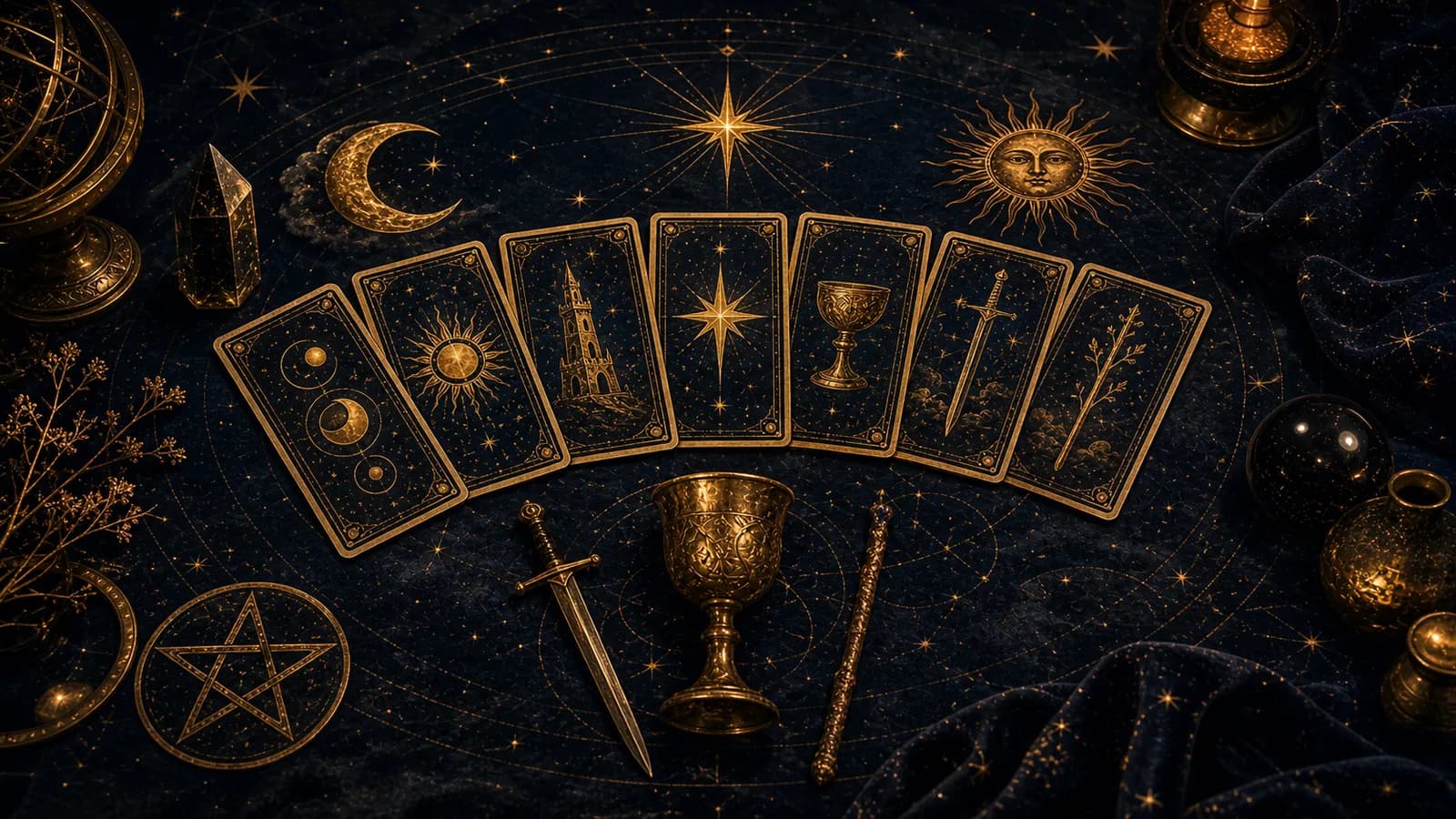
Tarot is not only read through keywords. The symbols inside the image often provide the most subtle clues. Once you learn to notice them, a card becomes a picture that speaks.
Moon And Sun
The Moon is often linked to the subconscious, uncertainty, intuition, and what is not yet clear. It is not necessarily negative. It simply says you may not have the full picture. The Sun points toward clarity, vitality, visibility, and trust.
Roads, Gates, And Mountains
Roads usually point to process and choice. Gates suggest thresholds: you are moving from one phase into another. Mountains often symbolize goals, challenges, or places that require time to reach.
Water And Sky
Water relates to emotion, memory, and movement. Still water and stormy water tell very different stories. The sky often reveals the atmosphere of the mind: clear, stormy, dark, or full of stars.
Put Symbols Back Into The Question
The same symbol changes depending on the question. Water in a relationship reading may be emotion; in a career reading it may be adaptability. Do not apply symbols mechanically. Ask what role the image plays here.
A symbol is not the answer. It is a path toward the answer.
Tarot Symbols Come From Many Layers
Tarot imagery does not come from one single source. Early tarot belongs first to card play and visual art; later it was absorbed into divination, occult interpretation, and modern reflective reading. The Met’s record for a Visconti-Sforza tarot card shows the artistic and courtly context of early tarot, while the V&A traces tarot’s movement into modern fortune-telling culture.
So it is better not to claim that every symbol has had one eternal meaning. Symbolic meaning comes from image tradition, deck design, reading method, and the specific question.
The Four Suits As Symbols
Modern readers often treat the Minor Arcana suits as four fields of life. Cups relate to emotion, relationship, and imagination. Swords relate to thought, language, judgment, and conflict. Coins or Pentacles relate to the body, resources, work, and material stability. Wands relate to action, desire, inspiration, and life force.
These associations are useful, but they do not replace observation. Swords are not always negative; they can bring clarity. Cups are not always romantic; they can also point to emotional overflow.
Color, Direction, And Posture
Objects are not the only symbols. Color speaks too. Bright yellow often suggests visibility, consciousness, and vitality. Deep blue or black often suggests mystery, reflection, or the subconscious. Red may point to life force, desire, urgency, or warning.
Direction can also matter. A figure facing left may suggest memory, the past, or inward attention. A figure facing right may suggest action, the future, or outward movement. These are not rigid rules, but useful visual clues.
The Same Symbol In Different Contexts
The Moon in a question about anxiety may show uncertainty or the subconscious. In a creativity question, it may suggest imagination. In a risk question, it may warn that information is unclear. The Sun in an emotional reading may show renewed vitality; in a career reading, it may suggest recognition and visibility.
Symbol reading is not dictionary lookup. It is contextual judgment. Ask what the symbol is doing in this question.
Build Your Own Symbol Journal
When a symbol appears, record three columns: traditional association, how it appears in this specific card, and what role it played in the reading. Over time, this becomes your own stable symbolic vocabulary.
Read Symbols In Layers
A useful symbol reading moves through three layers. First, name the literal object: moon, road, cup, sword, animal, crown, water, wall. Second, notice its condition: full or hidden, open or blocked, calm or stormy, near or far. Third, connect it to the question.
Water behind a figure may suggest emotion in the background. Water surrounding a figure may suggest immersion. Water flowing from a vessel may suggest expression, exchange, or release. The same symbol becomes more precise when you observe its placement and behavior.
This approach also helps with reversed cards, because a reversed image may make a symbol feel blocked, exaggerated, or turned inward.
Examples From Familiar Cards
The High Priestess often includes pillars, a veil, and stillness. The symbols create a feeling of threshold and hidden knowledge. In a question about timing, she may advise patience. In a question about trust, she may point to intuition that has not yet become verbal.
The Tower often includes height, lightning, falling figures, and broken structure. In a project question, the tower may point to a weak assumption. In a personal question, it may show the shock of truth. The symbol is intense, but it does not have to become fatalistic.
The Star often includes water, nakedness or openness, stars, and a calm landscape. In a healing question, these symbols may suggest renewal. In a career question, they may point to long-term direction rather than immediate reward.
Symbol Clusters Matter
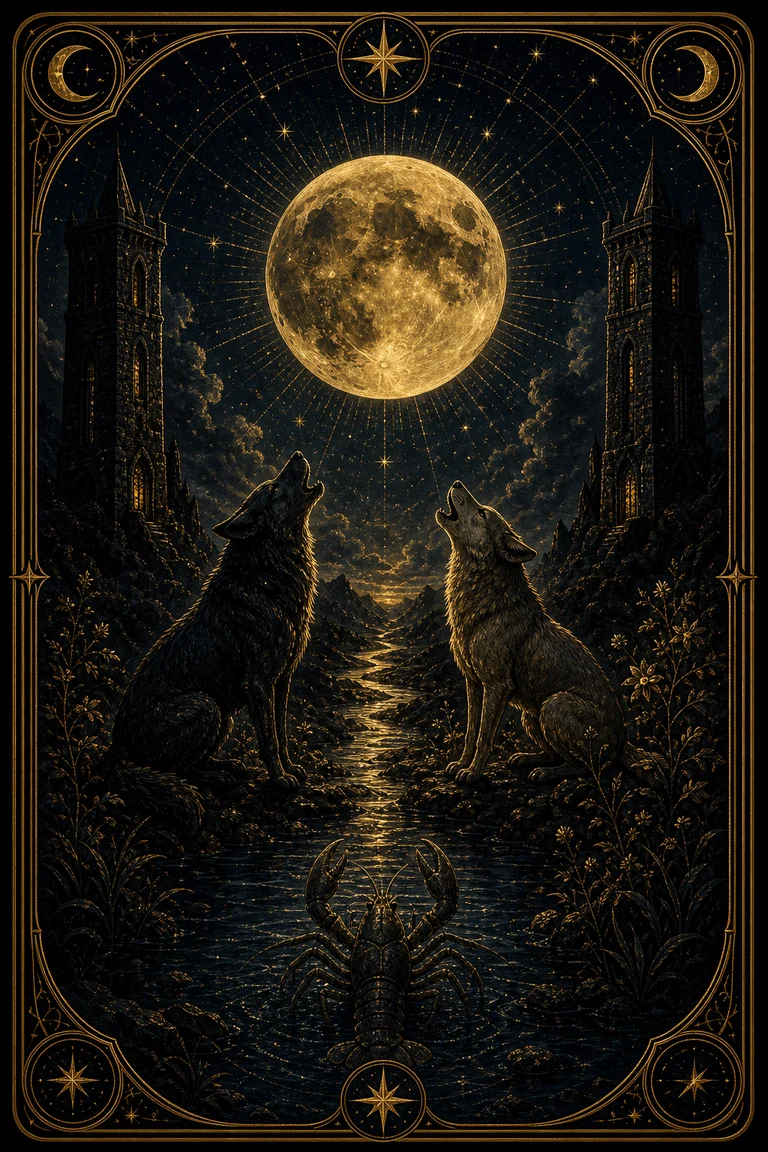
Do not isolate one symbol from the whole card. A moon beside a calm path feels different from a moon above restless water. A sword held upright feels different from swords lying on the ground. A crown on a confident figure feels different from a crown falling from a tower.
Symbol clusters are often where the reading becomes specific. Ask: which symbols reinforce each other? Which symbols create tension? Which symbol first pulled my attention, and why?
Practice: One Card, Five Symbols
Choose one card and list five visible details before looking up meanings. For each detail, write one possible association and one question. If you choose The Moon, your details might include the moon, water, path, animals, and towers. The questions might be: What is unclear? What instinct is active? What path continues through uncertainty? What feels wild or domesticated? What boundary frames the scene?
This exercise teaches you to read visually instead of relying only on keywords. It works especially well before attempting a larger tarot spread.
Avoid Over-Reading Tiny Details
Symbol reading needs balance. It is possible to make every leaf, cloud, and fold of clothing carry too much weight. A good rule is to give the most attention to symbols that are visually prominent, repeated across cards, or strongly connected to the question.
If a small detail catches your eye, test it against the rest of the card. Does the surrounding image support that interpretation? Do nearby cards echo the same idea? Does it help answer the actual question? If not, note the detail but do not let it take over the reading.
This is especially important with richly illustrated modern decks. Some details belong to the artist’s style or worldbuilding rather than a universal tarot code. Respect the image, but keep the reading coherent.
Compare Decks To Learn Symbol Flexibility
If you own more than one deck, compare the same card across two versions. What stays the same? What changes? The Moon may keep themes of uncertainty and instinct, but one deck may emphasize wilderness while another emphasizes dream, water, or fear. The comparison teaches you which meanings are stable and which depend on the deck’s visual language.
This habit also prevents rigid interpretation. Tarot symbols are alive because they are repeated, revised, and reimagined across decks and readers.
Use Symbols To Ask Better Questions
Symbols can also improve the question itself. If a card shows a closed gate, ask, “What threshold am I approaching?” If a road disappears into mountains, ask, “What long process am I trying to rush?” If water is turbulent, ask, “Where are emotions affecting my judgment?” If a figure looks away, ask, “What am I avoiding or outgrowing?”
This turns visual noticing into inquiry. The symbol does not merely decorate the card. It helps you phrase the next, more precise question.
Quick FAQ
Do tarot symbols have fixed meanings?
Some symbols have strong traditional associations, but they are not fixed in every reading. Deck style, question, position, and surrounding cards all matter.
Should I study symbolism before learning card meanings?
You can study both together. Keywords give you a starting map; symbols make the map more detailed and personal.
What if I notice a symbol that guidebooks ignore?
Use it carefully. If the detail strongly catches your attention and connects to the question, it may be relevant. Just avoid building the whole reading on one tiny detail without support from the rest of the card.