Minor Arcana: Four Suits And 56 Cards
Learn the structure of the Minor Arcana, the themes of its four suits, and a simple method for reading numbered and court cards.
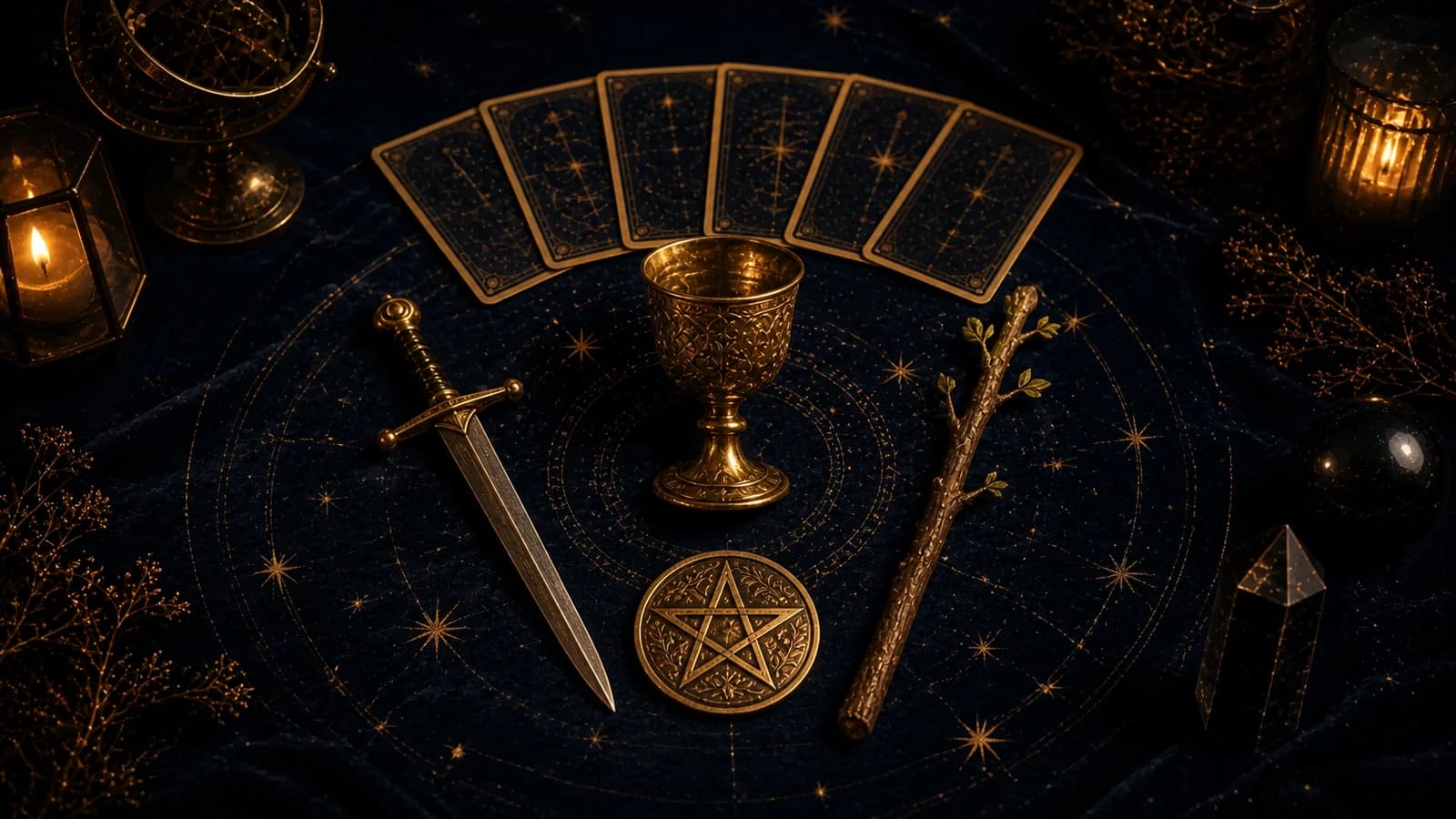
The Major Arcana may contain tarot’s most famous images, but the Minor Arcana is where everyday life comes into focus. Its cards speak about conversations, work, attraction, conflict, money, habits, and the small choices that gradually shape a larger story.
You do not need to memorize 56 separate definitions. A more useful approach is to understand how three layers work together: suit, number or rank, and image. Once you can combine those layers with the question, the Minor Arcana becomes a system you can reason through instead of a list you must recite.
What Is In The Minor Arcana?
A standard 78-card tarot deck contains 22 Major Arcana cards and 56 Minor Arcana cards. The Minor Arcana is divided into four suits, with 14 cards in each suit:
- Ten numbered cards: Ace through Ten
- Four court cards: Page, Knight, Queen, and King
The names vary between decks. Wands may be called Batons or Staves. Pentacles may appear as Coins or Disks. A Page may be called a Knave, Princess, or Daughter. These changes matter when learning a particular deck, but the underlying structure is still recognizable.
Museum collections also show why it is worth keeping history separate from modern interpretation. Italian tarot used Cups, Swords, Batons, and Coins, yet the reflective meanings now attached to those suits developed through different decks and reading traditions. A suit is a starting field of experience, not an eternal one-word definition.
Cups: Emotion, Connection, And Receptivity
Cups often draw attention to feeling: affection, grief, empathy, imagination, intimacy, or the way emotions move between people. They can describe relationships, but they are not limited to romance. A Cups card may be about friendship, creativity, memory, or your capacity to receive support.
When Cups appear, ask:
- What am I feeling, and what am I avoiding feeling?
- Is emotion flowing, contained, offered, or spilled?
- What kind of connection is possible here?
Too many Cups do not automatically mean happiness. They can also point to fantasy, emotional overload, or a need for clearer boundaries. Read the condition of the water and vessels in the image, not only the suit label.
Swords: Thought, Language, And Tension
Swords commonly relate to the mind: ideas, beliefs, communication, decisions, truth, and conflict. The suit can feel difficult because thought often cuts, divides, and exposes. Yet Swords can also bring precision, honest conversation, and the clarity needed to make a choice.
Useful questions include:
- Which thought is shaping this situation?
- What needs to be said clearly?
- Am I facing a real obstacle or rehearsing one in my mind?
A Sword is a tool before it is a verdict. Notice whether it is raised, lowered, carried, crossed, or left on the ground. Those details can distinguish focused judgment from defensiveness or exhaustion.
Wands: Action, Desire, And Creative Force
Wands often point toward initiative, enthusiasm, ambition, sexuality, courage, and the urge to create or explore. This suit tends to move. It asks what wants to begin, expand, compete, or take up space.
When Wands appear, ask:
- Where is my energy trying to go?
- What deserves action now?
- Is this inspiration sustainable, scattered, or becoming pressure?
Wands are not always a simple “go.” Fire can warm, illuminate, or burn through resources too quickly. A Wands-heavy reading may show exciting momentum, but it may also ask for pacing and direction.
Pentacles: Body, Work, And Material Reality
Pentacles, also called Coins or Disks, often relate to tangible life: the body, health routines, money, labor, home, skill, time, and the resources that make a plan real. This suit can be slow because material results usually require repetition.
Ask:
- What practical resource is available or missing?
- What can I build through consistent effort?
- What does my body or daily routine say about this situation?
Pentacles are not merely “money cards.” They can describe care, craft, belonging, sustainability, and self-worth. They remind a reading to return from possibility to what can actually be maintained.
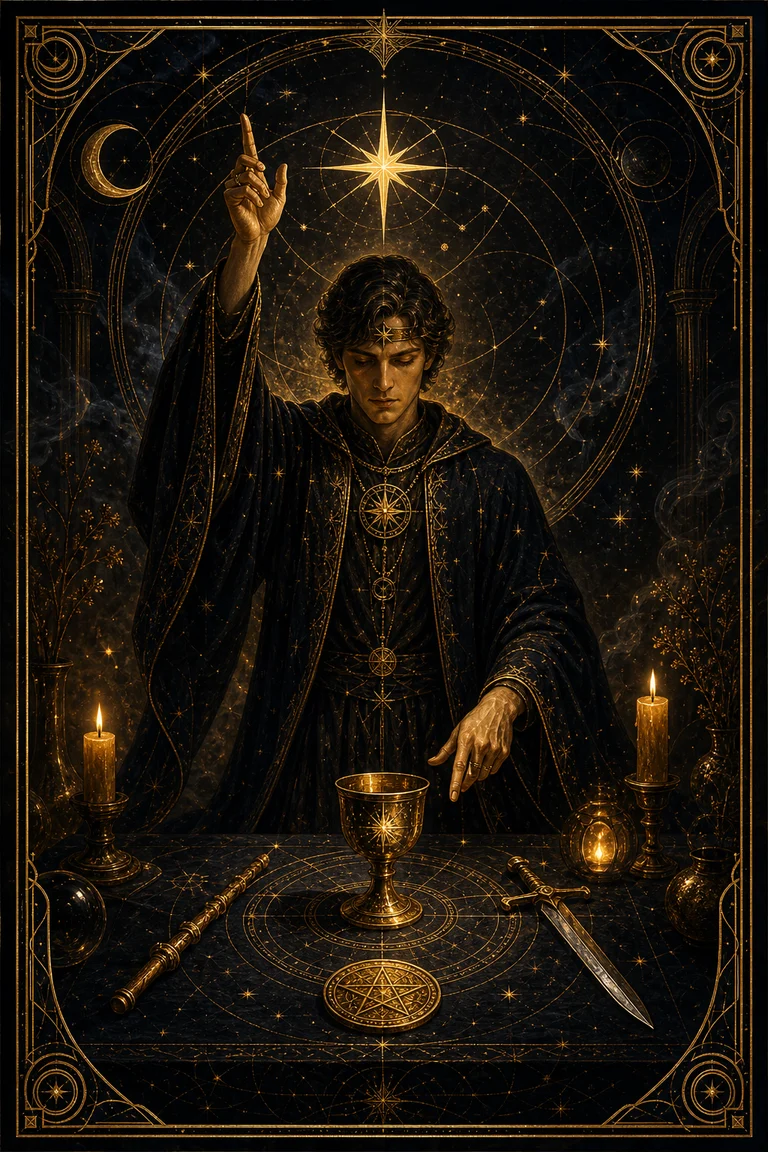
The Magician is a Major Arcana card, but the cup, sword, wand, and pentacle on the table offer a useful visual reminder: feeling, thought, action, and material reality are different tools. A balanced interpretation asks which tool is active, which is missing, and which one the question actually needs.
Read The Numbers As A Developing Pattern
The numbered cards become easier when you treat Ace through Ten as a sequence. The following themes are prompts, not fixed laws:
- Ace: a seed, opening, or raw potential
- Two: relationship, contrast, or a choice between forces
- Three: development, expression, or the first visible result
- Four: structure, stability, rest, or containment
- Five: friction, disruption, or adjustment
- Six: response, rebalancing, exchange, or movement onward
- Seven: testing, assessment, strategy, or persistence
- Eight: movement, repetition, skill, or restriction
- Nine: intensity, independence, or nearing completion
- Ten: culmination, completion, inheritance, or overflow
Number alone is not enough. A Four in Cups will not look like a Four in Wands because emotional containment and active structure produce different stories. Use the number to ask what stage the suit’s energy has reached.
The dedicated tarot numerology guide compares Ace through Ten across all four suits and includes a practice method for repeated numbers.
Court Cards: Person, Role, Or Way Of Acting
Court cards often confuse beginners because they can point to a person, but they do not have to. A court card may describe a role you are taking, an attitude to develop, a social dynamic, or the way an energy is being expressed.
One flexible way to read the ranks is:
- Page: curiosity, a message, learning, or an early encounter with the suit
- Knight: pursuit, movement, testing, or the suit in active motion
- Queen: embodied understanding, stewardship, or inward command of the suit
- King: direction, responsibility, authority, or outward command of the suit
These ranks are not rigid age or gender categories. A Queen can describe anyone using receptive authority; a King can describe anyone organizing energy outwardly. First ask what the figure is doing before deciding who the figure must be.
For examples of choosing between person, role, and action, continue with How To Read Tarot Court Cards.
A Four-Step Method For Any Minor Arcana Card
When you draw a Minor Arcana card, move through four steps:
- Name the suit field. Is the card centered on feeling, thought, action, or material reality?
- Name the stage. What does its number or court rank suggest about how that energy is developing?
- Describe the image. Notice posture, distance, weather, objects, direction, and what your attention finds first. Our guide to common tarot symbols can help you practice this layer.
- Return to the question. Translate the combined idea into language that is specific, grounded, and useful.
Suppose a card combines Swords with an Eight. Instead of recalling one fixed sentence, you might begin with “thought or communication at a stage of repetition, movement, skill, or restriction.” The image and question then tell you which possibility deserves attention.
Read Combinations, Not Isolated Keywords
In a multi-card spread, notice patterns before interpreting every card separately. Several cards from one suit may show where the reading’s weight sits. Missing suits can also be informative, though absence is a prompt to investigate rather than proof of a problem.
Look for:
- A dominant suit or repeated number
- Movement from lower to higher numbers
- Court cards facing toward or away from another card
- A contrast between emotional and practical cards
- One card that changes the tone of the others
Position matters too. The same Five of Pentacles will speak differently in a “resource,” “obstacle,” or “next step” position. If you are new to layouts, begin with a clear three-card tarot spread so every position has one job.
The next step is to practice reading tarot card combinations through reinforcement, tension, and development.
How Reversals Change The Pattern
A reversed Minor Arcana card does not require a completely separate dictionary. Start with the upright suit and number, then ask whether the energy feels blocked, delayed, excessive, internalized, or ready for review.
A reversed Wands card might show action without direction or creative energy held inward. A reversed Cups card might suggest emotion that cannot flow or boundaries that need attention. The context decides which variation fits. The fuller guide to reversed tarot cards explains how to make that choice without turning every reversal into bad news.
A Simple Practice Plan
To learn the Minor Arcana without memorization fatigue:
- Separate the deck by suit and describe the visual atmosphere of each group.
- Compare all four cards of the same number. Ask what the number keeps and what the suit changes.
- Draw one card each day and record suit, stage, image, and one real-life connection.
- At the end of a week, look for repeated suits or numbers instead of judging whether you were “right.”
- When you consult a guidebook, compare it with your observation rather than replacing your observation.
A daily one-card practice is enough. Familiarity grows through repeated attention, not through forcing the whole deck into memory at once.
Quick FAQ
Do the four suits always correspond to four elements?
Many modern systems associate Cups with water, Swords with air, Wands with fire, and Pentacles with earth. This is a useful reading framework, but deck traditions differ. Check the guide for your deck and treat correspondences as tools rather than universal facts.
Are court cards always real people?
No. They can represent people, roles, attitudes, developmental stages, or ways of handling a situation. The question and surrounding cards help you choose.
Should I memorize every Minor Arcana meaning?
Learn the structure first. If you can combine suit, number or rank, image, and question, individual meanings become easier to remember and more adaptable.